Purchasing property is the start of an incredible journey for anyone. After the movers leave, you might feel uncertainty. You’ll look at boxes and wonder where to start.
This change is big because you now have more responsibility. Following new homeowner tips helps you manage well. It’s not just about unpacking clothes and setting up furniture.
Creating comfort in your new home is key. Owners often feel the need to make everything perfect right away. But, it takes time to get used to the place.
Be gentle with yourself during this time. You’ve worked hard for this place, so enjoy every small win. Experts say to focus on safety and utilities first, then decorate.
Try organizing one room at a time to stay focused. This approach prevents burnout and keeps you motivated. Soon, your house will become your own special haven.
Key Takeaways:
- Moving is both emotional and practical.
- Planning helps you adjust quickly to your new space.
- Being patient is key to enjoying your new home.
Key Priorities after Move-in
Moving into a new home is exciting, but there’s a lot to do right away. First, make sure your home is safe and secure. This might seem like a lot, but it’s important for a smooth start in your new place.
Immediate Tasks for a Smooth Transition
To make your new home cozy, focus on a few critical tasks. These tasks help make your space comfortable, safe, and secure. For a detailed checklist, check out new homeowner tips.
Changing Locks and Checking Smoke Alarms
First, you should change the locks. It’s important to keep your home safe from unauthorized entry. Also, check smoke alarms to make sure they work. Replace batteries if needed and know where emergency shut-offs are.
Don’t forget to check your home’s safety features. This includes smoke and carbon monoxide detectors. Make sure they’re in good working order to keep you safe.
By doing these tasks first, you can enjoy your new home safely. You’ll know you’ve taken the right steps to protect it.
Avoiding Common First-time Homeowner Mistakes
When you move into a new home, it’s important to know the common mistakes first-time homeowners make. It’s not just about unpacking boxes. It’s about making your home safe and stable.
One big challenge is the financial strain from unexpected costs. Many spend all their savings on down payments and closing costs. This leaves little for maintenance and repairs.
Financial Planning and Maintenance
Good financial planning helps avoid the stress of homeownership. You need to budget for mortgage payments and also for maintenance and repairs.
Budgeting for Unexpected Expenses
It’s wise to save 1% to 3% of your home’s price each year for upkeep. For example, if your home is $300,000, save $3,000 to $9,000 yearly.
Key areas to focus on include:
- Regular maintenance tasks such as HVAC servicing and gutter cleaning
- Potential for appliance replacements
- Possible repairs due to wear and tear or unexpected events
By planning your finances well and saving for the unexpected, you can enjoy your new home without financial worries.
Building an emergency fund is also smart. Aim for 3-6 months of living expenses, including mortgage, utilities, and more. This fund helps in tough times like job loss or medical emergencies.
Creating a Comfortable Living Space
As you settle into your new home, making it comfortable is key. This means unpacking and organizing your stuff. It’s about turning the place into your own.
Unpacking and Organizing
Unpacking and organizing are vital steps. It’s not just about getting rid of boxes. It’s about making your home functional and cozy.
Start by unpacking essentials like toiletries, towels, and clothes for everyone. Think about your daily routine and how to arrange your stuff. This will make your life easier.
Prioritizing Essential Tasks
To make unpacking easier, focus on the most important tasks first. Start with the kitchen and bedrooms. For more tips, check out the ultimate home shopping checklist for first-timers.
Set up beds, unpack kitchen essentials, and organize the bathroom first. Then, you can decorate and organize storage spaces.
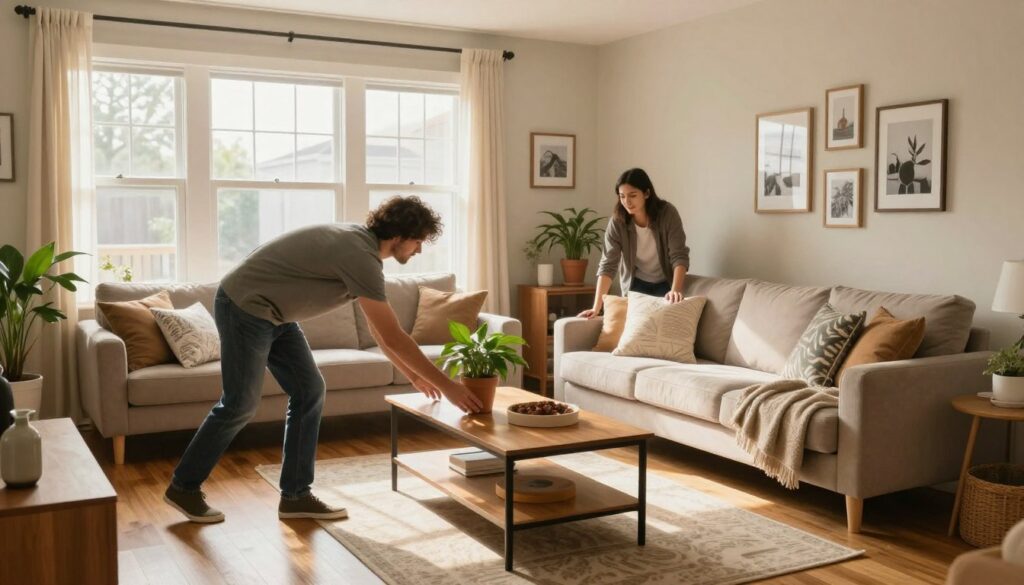
Organizing your new space makes it easier to find things. It also makes your home feel calm and welcoming. Use bins, baskets, and shelves to keep things tidy.
By following these new homeowner tips, you can make your home warm and inviting. Remember, settling in is a process. Take it one step at a time.
Long-term Homeowner Habits
As you move into your new home, it’s key to start good habits. These habits help keep your home in great shape and avoid expensive fixes. One important habit is to make a maintenance plan. This plan should include checking HVAC filters, looking for leaks, and making sure air flows well.
For new homeowner tips, setting a schedule is a good idea. It helps you stay on track with your maintenance tasks.
Building a Maintenance Routine
A good maintenance routine helps spot problems early. This means cleaning gutters, checking your roof, and keeping appliances in good shape. Being proactive can make your home’s systems last longer.
Documenting Maintenance and Repairs
It’s important to keep a record of all maintenance and repairs. This record is useful for selling your home later. It shows the history of your property and can help with warranties or insurance claims.
For more on what to do after closing, check out The Home Closing Process. It will help you get ready for the duties of being a homeowner.