
Home seller pricing strategy matters more when buyers are active but still cautious about the monthly payment. A seller may see more showings, more saved listings, and more questions, but that does not mean buyers can absorb every price stretch, repair concern, or closing-cost surprise.
The 2026 market is giving sellers a useful reminder: demand is not the same thing as unlimited affordability. Buyers still have to make the numbers work, and a home that ignores that reality can sit longer than expected. That pressure becomes clearer beside a practical look at buyer affordability, because the seller’s price eventually has to survive the buyer’s lender, budget, and comfort level.
Buyer Interest Is Real, But Affordability Still Sets The Limit
More buyer activity can make sellers feel confident, and in some cases that confidence is justified. Existing-home sales increased 3.2% in May 2026, and first-time buyers made up 35% of sales, the highest share since June 2020, based on the latest existing-home sales update.
That matters because first-time buyers are often motivated, but they are also payment-sensitive. They may not have proceeds from a previous home sale. They may be balancing down payment, closing costs, inspection concerns, and moving expenses at the same time.
A seller who only sees the showing request may miss the bigger constraint. The buyer may like the home, but liking the home does not make the mortgage easier to carry.
Interest does not erase affordability. It only creates an opening for the seller to prove the home is priced and prepared well enough to justify the offer.
Why Home Seller Pricing Strategy Matters In 2026
A good home seller pricing strategy starts with the buyer’s math, not the seller’s wish number. Sellers may naturally want to test the market, especially if they have watched home values rise over the last several years. But buyers are testing the market too.
They are comparing monthly payments, repair risk, insurance estimates, property taxes, and how much cash they need after closing. If the price feels too high for the condition, the buyer may not negotiate. They may simply move to the next home.
That does not mean sellers have to underprice. It means the opening price needs to be defensible.
The Listing Price Has To Pass The Monthly Payment Test
Sellers often think in terms of sale price. Buyers think in terms of monthly payment.
That difference can create friction. A seller may see a $10,000 price adjustment as small in the context of a home sale. A buyer may see it as a payment increase that pushes the home outside the comfort zone, especially when taxes, insurance, and closing costs are already tight.
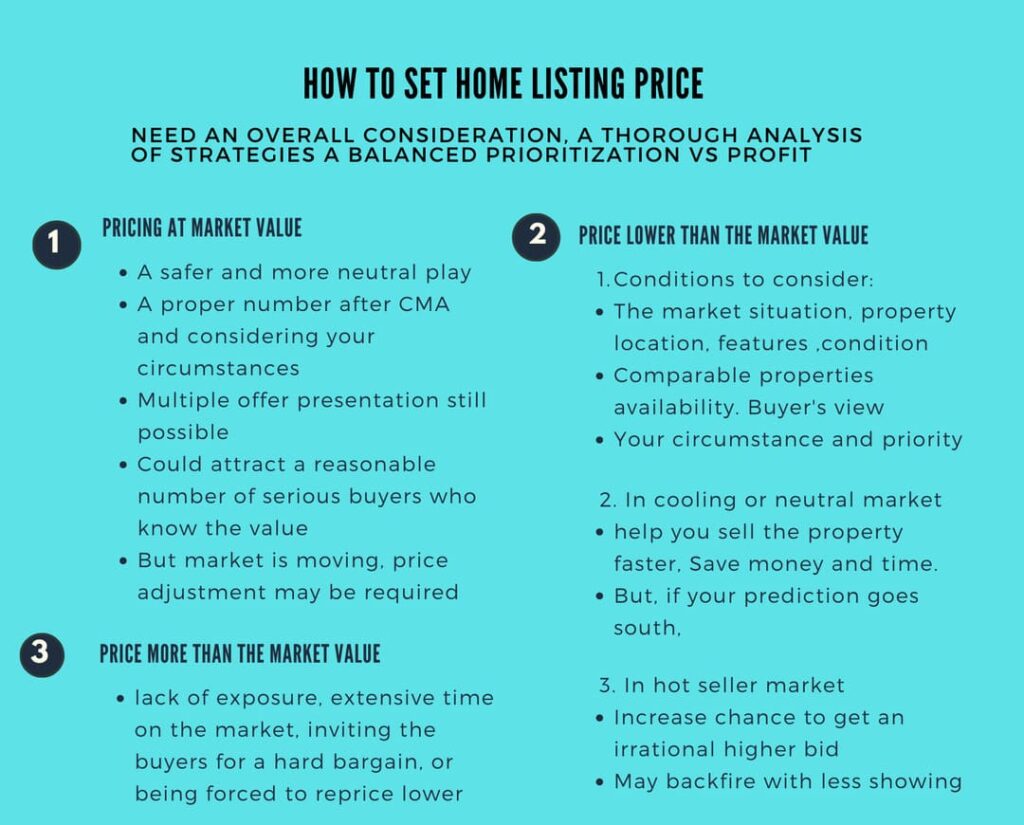
This is why pricing slightly above the market can be risky. The home may still receive showings, but those showings may not convert into serious offers. Buyers may use the tour to compare it against better-priced homes.
A house does not need to be the cheapest option to compete. It needs to make sense at its price point.
The payment test is real because most buyers are not shopping with the listing price alone in mind.
Condition Can Decide Whether Buyers Stretch Or Walk
Condition becomes more important when affordability is tight. Buyers may tolerate a higher price if the home feels ready, clean, maintained, and easy to move into. They may hesitate when the price is high and the repair list starts growing.
That does not mean sellers need a full renovation before listing. Often, the better move is to handle obvious friction points: deferred maintenance, poor curb appeal, weak lighting, damaged trim, outdated safety items, clutter, odors, or small issues that make buyers wonder what else has been ignored.
The goal is not perfection. The goal is confidence.
| Seller Decision | Buyer Reaction | Better Strategy |
|---|---|---|
| Price above nearby comparable homes | Buyer expects stronger condition or concessions | Support price with preparation and realistic comps |
| Ignore visible maintenance | Buyer assumes bigger hidden costs | Fix small issues before listing |
| Refuse all negotiation early | Buyer may move to another option | Know where flexibility makes sense |
| Overvalue cosmetic updates | Buyer compares total payment, not just finishes | Price against full market value |
| Wait too long to adjust | Listing can lose early momentum | Track showing feedback quickly |
A clean, prepared home gives buyers fewer reasons to reduce their offer. A poorly prepared home invites them to add a repair discount in their head before they ever write anything.
Seller Flexibility Can Protect The Deal
Price is not the only lever. Sellers may also compete through repairs, closing timeline, seller credits, included items, or willingness to address buyer concerns after inspection.
That flexibility can be more useful than holding firm on every detail. If a buyer is struggling with cash needed at closing, a seller concession may help more than a small price reduction. If the buyer is worried about condition, a targeted repair may keep the deal alive.
The right move depends on the home, the offer, and the local market. But sellers should understand that negotiation is not automatically weakness.
Flexibility can create certainty when it helps a qualified buyer cross the finish line without forcing the seller into a larger price cut later.
Market Signals Sellers Should Read Before Adjusting
Sellers should not panic after a quiet weekend, but they should not ignore patterns either. The first signals usually appear in showings, feedback, saves, repeat visits, and offer quality. Mortgage rates remain one of the biggest reasons. Freddie Mac’s weekly survey showed the 30-year fixed-rate mortgage averaged 6.43% as of July 2, 2026, down from the previous week but still high enough to keep payment pressure in the conversation. The same update showed the 15-year fixed-rate mortgage averaged 5.79% in that week’s mortgage rate survey.
If the home is getting views online but few showings, the price or presentation may be holding buyers back. If showings are happening but offers are not, the issue may be condition, price, layout, location, or competition. If offers come in below asking, the market may be telling the seller where buyers see the value.
The most useful feedback is not always flattering, but it can be valuable. Sellers should watch whether buyers mention repairs, payment pressure, comparable homes, or hesitation about the price.
A smarter home seller pricing strategy does not chase every comment. It looks for repeated signals and responds before the listing feels stale.
A Smarter Price Can Create A Cleaner Sale
The best sellers in 2026 are not the ones who assume buyers will stretch because they scheduled a showing. They are the ones who understand that buyers may be interested, cautious, and financially limited at the same time.
That makes pricing, preparation, and negotiation part of one decision. A home that enters the market with a realistic price and a clean presentation can earn stronger attention early. A home that asks buyers to overlook price and condition problems may need more time, more concessions, or a later reduction.
A practical home seller pricing strategy helps sellers meet the market without giving away value. Buyers are still looking, but the deal has to survive the payment, the inspection, and the comparison to every other home they can afford.