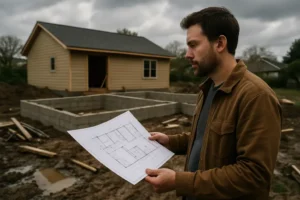
A home’s asking price can look affordable while its insurance profile tells a different story. Checking home insurance before buying can reveal costs and coverage problems that are difficult to see during a showing but can materially change what the property costs to own.
Buyers do not necessarily need to purchase a policy before making an offer. An early quote or informal insurance estimate can instead act as another due-diligence tool, alongside reviewing property condition, anticipated repairs and major systems before an offer.
Home Insurance Before Buying Can Change the Affordability Math
Mortgage principal and interest are only part of a homeowner’s monthly housing expense. Property taxes, homeowners insurance and other applicable costs can push the actual payment above the figure a buyer initially uses to compare homes.
The Consumer Financial Protection Bureau advises buyers to consider insurance costs when deciding how much they can comfortably spend. Its homeowners insurance shopping guidance also recommends obtaining written quotes from multiple insurers and comparing both coverage and deductibles.
Waiting until closing to investigate insurance can therefore create an avoidable surprise. A buyer who budgets around a rough estimate may discover that the specific property costs substantially more to insure than anticipated.
An early quote is not a final premium guarantee. The insurer may need additional information, and underwriting can change as more property details become available. Still, the quote can expose risk early, when the buyer still has more flexibility.
Location Can Matter as Much as the House Itself
Insurance pricing does not stop at the property line. Insurers may evaluate hazards associated with the surrounding area, including exposure to wind, wildfire, hail, flooding or other disasters.
That distinction matters when comparing two similarly priced homes. One may carry a manageable standard homeowners premium, while another may require additional coverage or present fewer insurer options because of its location.
Flood risk deserves separate attention because standard homeowners policies generally do not cover flood damage. Depending on the property and financing, separate flood insurance may be required or worth considering even when it is not mandatory.
The CFPB specifically advises buyers to investigate disaster exposure and warns that homes in higher-risk areas can be harder or more expensive to insure. Its property-risk guidance even suggests obtaining an informal insurance estimate before committing to a house in a higher-risk location.
Roof Age and Property Condition Can Affect More Than Repair Costs
Buyers routinely look at the roof as a potential replacement expense. Insurance adds a second reason to investigate it.
Roof type, condition and age can influence an insurer’s assessment of the property. An older roof does not automatically make a house uninsurable, but it can create questions about eligibility, coverage terms or required improvements depending on the insurer and local market.
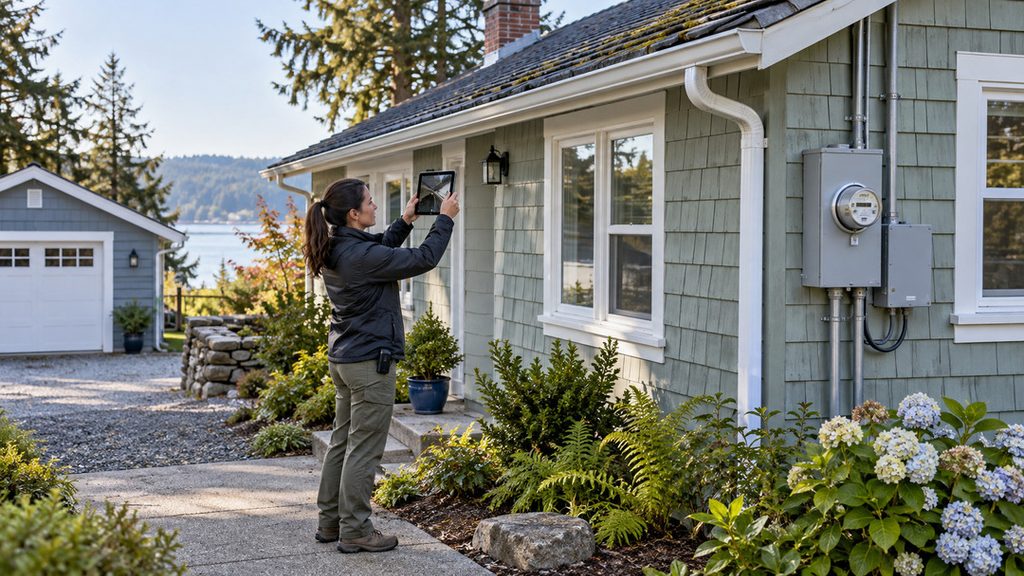
The same principle applies to other property characteristics. Electrical systems, construction type, building age, previous damage, mitigation features and general condition can all become relevant during underwriting.
That means visible deterioration should not be evaluated only through a repair budget. Condition can affect insurability, which can alter the ownership calculation before the buyer ever hires a contractor.
Ask for available records rather than relying solely on appearances. Roof permits, replacement invoices, prior repair documentation and other property records can help buyers provide insurers with more accurate information.
Compare the Deductible, Not Just the Premium
A low annual premium can look attractive until the deductible is examined.
The deductible determines how much of a covered loss the homeowner is responsible for before insurance pays according to the policy terms. Some policies may also contain separate deductibles for certain hazards.
That creates a trade-off. Raising the deductible may reduce the premium, but it also transfers more financial responsibility to the homeowner when a covered claim occurs.
Before comparing quotes, make sure the assumptions are reasonably similar.
| Insurance factor | What buyers should compare | Why it matters |
|---|---|---|
| Annual premium | Cost for comparable coverage | Changes recurring ownership costs |
| Deductible | Amount paid before covered benefits apply | Determines out-of-pocket exposure |
| Dwelling coverage | Amount and basis of structural coverage | Affects protection for the house |
| Hazard-specific terms | Wind, storm or other applicable provisions | May create different deductibles or limits |
| Flood coverage | Whether separate protection is needed | Standard homeowners coverage generally excludes floods |
| Eligibility conditions | Repairs or updates required by insurer | May create pre- or post-closing costs |
The useful question is not simply, “Which quote is cheapest?” It is, “What risk am I keeping?” A lower premium paired with substantially higher out-of-pocket exposure may not fit a buyer with limited emergency reserves.
Coverage Availability Can Become a Financing Issue
For buyers using a mortgage, homeowners insurance is not simply optional protection to arrange whenever convenient. Lenders generally require acceptable coverage because the home secures the loan.
That makes availability different from price. An expensive quote may strain the budget, but difficulty obtaining qualifying coverage can affect whether the transaction proceeds as planned.
Buyers considering unusual, older, heavily damaged or hazard-exposed properties should leave enough time to shop among insurers rather than assuming the first company contacted will write the policy.
The timing becomes especially important when contract, financing and closing deadlines are approaching simultaneously. Insurance problems discovered late can create pressure precisely when buyers have fewer practical options.
Watch for Insurance Questions Before the Offer Becomes Commitment
Insurance should not replace a home inspection, title review, flood-risk investigation or specialist evaluation. It adds another perspective to the same purchase decision.
Before making an offer on a property with obvious risk factors, buyers can gather the address, construction year, roof information, square footage, known updates and other requested details and ask insurers for preliminary pricing. They should also ask what information could change that estimate later.
A competitive market may not allow every buyer to complete extensive insurance shopping before submitting an offer. In that case, insurance research should move quickly once the property becomes a serious contender and should be coordinated with applicable contract and financing deadlines.
Treat Insurance as Part of the Property Price
Home buyers often negotiate intensely over several thousand dollars in purchase price while giving much less attention to recurring expenses that can follow them for years. Insurance belongs in that broader calculation.
Checking home insurance before buying can uncover a high premium, substantial deductible, coverage limitation or underwriting concern early enough to influence how a buyer values the property. The objective is not to reject every home with higher insurance costs. It is to understand those costs before an attractive asking price becomes an expensive ownership commitment.
Frequently asked questions
Can I get a homeowners insurance quote before I own the house?
Yes. Insurers can generally provide a quote using information about the buyer and property. The figure remains an estimate until underwriting is complete, so buyers should ask what additional information could change the final premium.
Does getting an insurance quote mean I have to buy the policy?
No. A quote allows buyers to compare estimated premiums, coverage terms and deductibles. Coverage generally needs to be finalized later if the buyer proceeds and the lender requires proof of insurance for closing.
Should I check insurance on every house I tour?
Usually not. Insurance research is most useful once a property becomes a serious candidate, particularly when it has an older roof, unusual construction, known damage or significant exposure to weather and disaster risks.