
Hybrid home projects are becoming a practical middle path for homeowners who want to control costs without taking on unsafe or unrealistic work. The idea is simple: handle lower-risk preparation, planning, cleanup, painting, or product selection yourself, while reserving electrical, gas, plumbing, structural, roofing, and permitted work for qualified professionals.
That split matters more as home improvement spending stays elevated. Harvard’s Remodeling Futures Program projected owner-occupied improvement and maintenance spending to reach $518 billion in 2026, with year-over-year growth slowing from about 2.1% in mid-2026 to about 1.6% by the end of 2026, according to the Harvard remodeling outlook. Slower growth does not mean projects are cheap; it means households need sharper project choices.
For buyers and current owners, this is also a budget issue after closing. A renovation that starts as a cosmetic plan can compete with reserves for insurance deductibles, repairs, taxes, and emergency maintenance. A cautious plan protects both the house and the household cash position.
How Hybrid Home Projects Fit 2026 Budgets
What Hybrid Home Projects Can Safely Include
Hybrid home projects work best when the owner’s portion is clearly limited to tasks that do not put people, property, or code compliance at risk. Reasonable DIY components may include measuring rooms, gathering product quotes, removing loose personal items before work starts, painting low-risk interior surfaces, assembling design preferences, or handling cleanup that does not involve hazardous materials.
The professional portion should cover work that can affect safety, building performance, insurance, resale, or permits. That includes electrical service changes, gas lines, major plumbing changes, load-bearing walls, roof work, foundation concerns, HVAC replacement, and any job that local rules require a licensed contractor to perform. If a project involves water intrusion, combustion, wiring, structural movement, fall risk, or hidden damage, savings from doing it yourself can disappear quickly if the work fails.
Project activity data from early 2026 showed a clear shift away from pure DIY and toward mixed execution. In the research provided, Q1 2026 showed 46% of homeowners using a hybrid method, while 39% handled projects purely through DIY and 15% relied only on contractors. That pattern fits what many owners already feel: labor is expensive, but some tasks still belong with a trained trade professional.
Why The Split Should Start With Risk, Not Pride
Many homeowners are motivated by cost savings, and the research provided shows that roughly two-thirds of DIYers cite saving money or believing the work is cheaper if they do it themselves. That motivation is understandable, especially after a home purchase. Still, confidence is not the same as competence, and a task that looks simple in a short video may involve hidden conditions inside walls, floors, or mechanical systems.
A better test is whether a mistake would be cosmetic, inconvenient, or dangerous. A poor paint line can be corrected. A poorly supported opening, a miswired circuit, or a leaking supply line can create serious consequences. Budget discipline means choosing the less expensive safe path, not the cheapest task assignment on paper.
Budget Rules For Hybrid Home Projects
Separate Materials, Labor, And Contingency
One reason hybrid home projects can help is that they force homeowners to break the job into parts. Instead of approving one vague number, the owner can separate materials, professional labor, owner-handled tasks, delivery charges, permit costs, disposal, and contingency. That makes it easier to see whether the DIY portion is actually saving money or simply shifting time, risk, and responsibility back to the household.
Start with a written scope before buying materials. A bathroom refresh, for example, could mean paint and hardware, or it could mean plumbing changes, ventilation work, tile removal, subfloor repair, and fixture replacement. Those are not the same project. A clear scope reduces the chance that a low initial estimate turns into an open-ended job.
Homeowners planning a cautious scope may benefit from a written checklist like the one in DIY renovation planning, especially before buying tools or materials that may not fit the final plan.
Use Spending Benchmarks Carefully
National spending figures can provide context, but they should not be treated as a quote for one house. Houzz reported that among homeowners planning renovations in 2026, about 54% had renovated in 2025; median renovation spend stayed at $20,000, while the 90th percentile reached $150,000 in 2025, according to the 2026 Houzz study. Those numbers show how wide the range can be.
That range is why budget-conscious owners should avoid designing from averages alone. A small repair in a newer house may have a very different cost profile from the same visible problem in an older home with outdated systems. The safer move is to price the specific house, the specific materials, and the specific labor market rather than assuming a national median applies.
For buyers, renovation planning should happen before making aggressive assumptions about post-closing improvements. If the mortgage payment already strains the monthly budget, a project that requires deposits, materials, and change orders can create pressure quickly. A useful site in the same network is J. Siemering Homes, which helps readers understand how ownership decisions connect with broader home planning.
Where DIY Components Usually Make Sense
Owner Tasks That Can Reduce Paid Hours
The safest DIY components are usually planning and finish-level tasks, not trade work. Homeowners can often save professional time by making decisions before the contractor arrives. That includes choosing fixtures within the contractor’s specifications, confirming finish colors, clearing work areas, protecting furniture, and setting a communication schedule.
These tasks do not replace skilled labor, but they can reduce delays. Contractors often lose time when materials are undecided, rooms are not ready, or access is blocked. A homeowner who handles preparation well may not lower the hourly rate, but can reduce wasted hours and limit confusion.
- Good DIY candidates: budgeting, product research, simple painting, room clearing, nonhazardous cleanup, documentation, and finish decisions.
- Usually pro candidates: electrical, gas, plumbing, roofing, structural work, HVAC, permitted work, and jobs involving moisture damage or hazardous materials.
- Shared candidates: cabinet hardware, minor trim, landscaping design, fixture selection, and cosmetic updates, depending on skill level and project conditions.
Materials Choices Need Contractor Review
Buying materials yourself can look like an easy savings area, but it can backfire if the product is incompatible, delayed, damaged, or not accepted by the installer. Some contractors will not warranty labor on owner-supplied materials, while others will install them only if they meet stated specifications. That is not a reason to avoid comparison shopping; it is a reason to confirm requirements before purchase.
Budget-minded homeowners should ask whether the contractor needs specific dimensions, ratings, parts, adhesives, fasteners, underlayment, or installation clearances. Do not assume that a lower shelf price means a lower finished cost. A product that requires extra labor, special parts, or replacement can erase the savings.
Contractor Boundaries And Change Orders
Put The Hand-Off Points In Writing
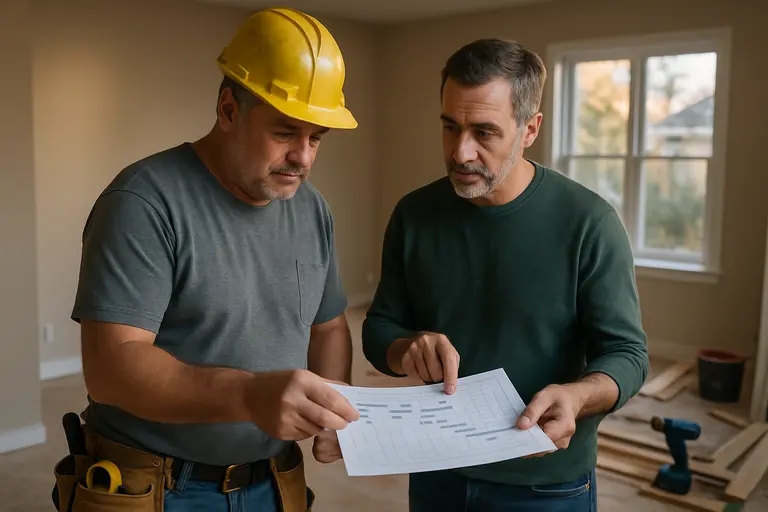
A hybrid plan only works when the hand-off between owner and pro is clear. The written agreement should state what the contractor is doing, what the homeowner is doing, who supplies materials, who handles disposal, who schedules inspections if required, and what happens if the owner’s work delays the contractor’s schedule.
This is not about creating conflict. It is about preventing assumptions. If the homeowner plans to remove cabinets before a kitchen contractor starts, the contractor should know whether they expect bare walls, capped utilities, protected floors, or a clear path for delivery. If any of those steps involve risk, the contractor may need to take over that portion.
Change orders deserve special attention. A change order should describe the added work, added cost, and added time before the work proceeds. Budget-conscious owners should avoid verbal changes that feel small in the moment but add up across a multi-week project.
Permits And Inspections Are Not Optional Savings
Permit rules vary by location, and homeowners should verify requirements with the local building department or a qualified professional before work begins. Skipping required permits to save money can create problems during insurance claims, refinancing, resale, or future repairs. It can also hide unsafe work behind finished surfaces.
Some owners assume that because they live in the home, they can perform any work themselves. That assumption is not safe. Local rules may still limit who can perform certain work, and lenders or insurers may care whether improvements were completed properly. For a buyer, unpermitted prior work can also become a negotiation issue during inspection.
Hybrid Home Projects In Practice
The practical value of hybrid home projects is not that they make every renovation cheap. Their value is that they help homeowners spend paid labor where skill, safety, and accountability matter most. The owner’s role becomes planning, preparation, decision-making, and limited low-risk work rather than trying to replace every trade.
A cautious project plan starts with three questions: What failure would be dangerous? What work may require a permit or licensed trade? What owner tasks can reduce delays without creating risk? If the answer is uncertain, price the professional option before starting. The cost of asking early is usually lower than paying someone to correct hidden damage later.
For budget-conscious homeowners, the strongest plan is rarely pure DIY or blank-check contracting. It is a defined scope, a realistic contingency, written hand-offs, and a firm boundary around high-risk work. That approach protects the home, the household budget, and the owner’s ability to make better decisions after the project begins.